What Happens If We Don’t Sort Waste?
Not sorting waste often feels like an everyday, harmless act. Some people even throw garbage carelessly on the road, while others responsibly hand it over to collection trucks but without separating it. It may feel like the job is done, but have you ever wondered what happens next?
When waste is not sorted, it is usually dumped into large dumping grounds known as landfills. Here, some waste decomposes slowly, while a large portion remains there for years, sometimes decades taking up massive space. These landfills release foul smells, pollute the air, and emit harmful gases like methane, a major contributor to climate change.
This is not just an environmental issue, it’s one of the biggest global challenges we face today. And while we are all contributing to the problem, we are also the ones facing its consequences. At Ekya Vana we believe nature is not ours to destroy but to care and nurture.
The Bigger Problem
Landfills are a mix of everything
- Biodegradable waste that could have been composted
- Recyclable materials like paper, plastic, and metal
- Reusable items that are simply thrown away
When all of this is dumped together, it becomes extremely difficult to separate later. As a result:
- Harmful gases increase global warming
- Toxic substances pollute soil and water bodies
- Wildlife and aquatic life are threatened
- Waste workers face serious health risks due to exposure
What could have been reused or recycled is lost forever just because it wasn’t sorted at the source
A Simple Solution
The solution is surprisingly simple: sorting waste at home.
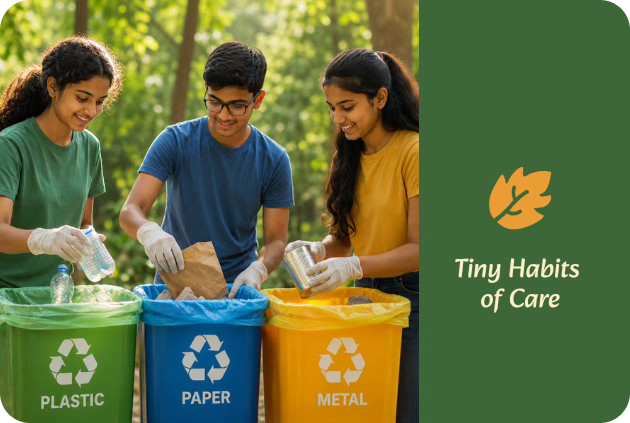
Waste can be easily divided into three basic categories:
- Wet Waste – food scraps, fruit peels (can be composted)
- Dry Waste – paper, plastic, metal (can be recycled)
- Hazardous Waste – batteries, chemicals (need safe disposal)
By doing this, wet waste can turn into nutrient-rich compost, dry waste can be recycled into new products, and hazardous waste can be handled safely.
Without sorting, wet waste in landfills produces methane, worsening global warming. But when composted, it becomes something beneficial instead of harmful. Recycling dry waste also reduces cutting down of trees, plastic production, and mining of natural resources.
Why the Future Needs It the Most
- Around 37% of global waste ends up in landfills
- 31% goes to open dumpyards
- In India, only 54% of waste is treated leaving massive amounts of waste to be stored on land
According to government estimates, if current practices continue, India will need 1,400 sq. km of land just to dump waste by 2047—that’s nearly the size of cities like Hyderabad, Chennai, and Mumbai combined. Imagine losing that much land not for homes, forests, or farming but for garbage.
A Better Tomorrow Starts Today
Sorting waste is not a complicated task. It doesn’t require big investments or drastic lifestyle changes. It simply requires awareness and consistency. A small habit at home can lead to:
- Cleaner surroundings
- Healthier communities
- A more sustainable planet